 ELXR
What does a transient shaper do?
A transient shaper makes the start of each hit (the attack) louder or softer, and the part after it (the sustain) longer or shorter. Unlike a compressor, it follows the shape of each hit rather than a level threshold, so it works the same on quiet and loud hits.
Attack and sustain
Every drum hit has a transient, the short, sharp start, and a sustain, the body and tail after it. A transient shaper gives you a knob for each: more attack for punch and snap, less for a softer hit; more sustain for a bigger, roomier sound, less for a tight, dry one.
Transient shaper vs compressor
- A compressor reacts when the level crosses a threshold. Quiet hits pass untouched, loud ones get squashed, and the attack and release times decide how the hit's shape changes.
- A transient shaper follows the shape of each hit, whatever its level. A ghost note and an accent get the same treatment, so it's easier to dial in.
- In practice: use a compressor to control level and add glue, and a transient shaper to change the shape of hits without changing the dynamics between them.
Settings that work
- Kick with more punch: attack up a little, sustain down a little.
- Snare with more crack: attack up; leave the sustain or raise it slightly for body.
- Tight drum loop: sustain down to shorten the room and tails.
- Softer, laid-back drums: attack down, sustain up.
- Big boosts: clip or limit afterwards, because a strong attack boost makes sharp peaks.
With Transient
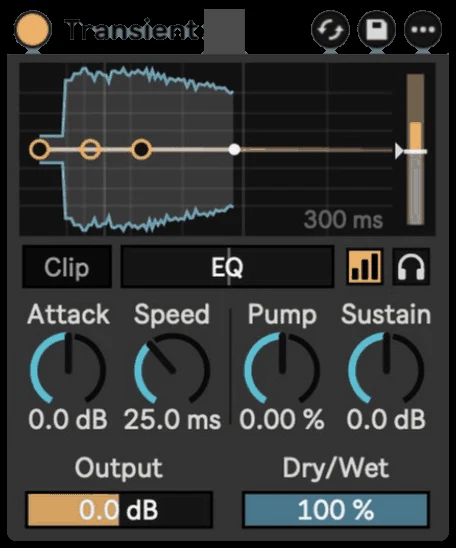
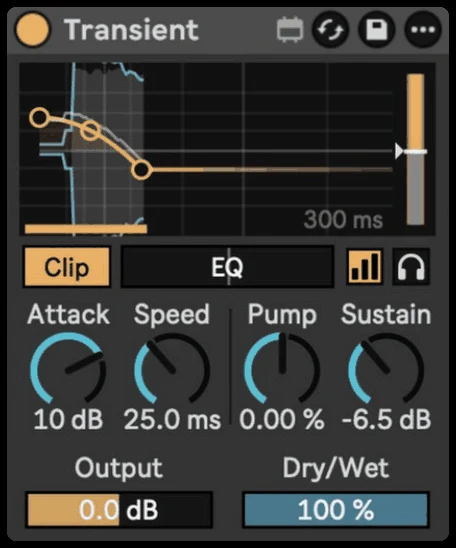
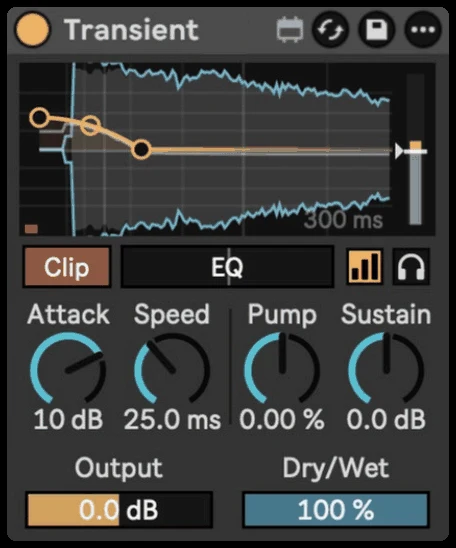
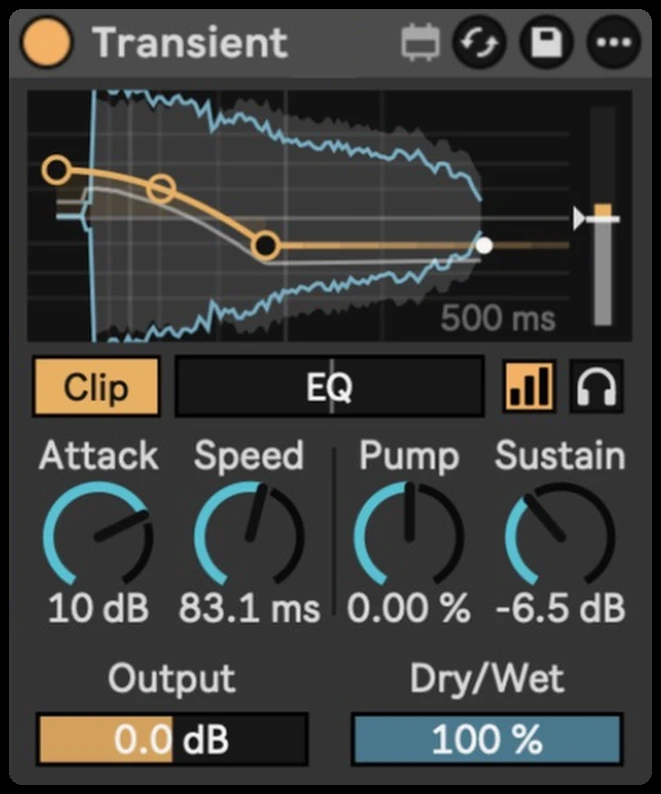
Transient has Attack, Sustain, Speed and Pump on a Sampler-style envelope you drag right on the device, and the display shows every hit coming in (grey) and the shaped result (blue). EQ and Sensitivity choose which frequencies trigger the shaping, so you can shape just the kick inside a loop. Clip soft-clips boosted hits, and Auto Gain keeps the level matched while you tweak.